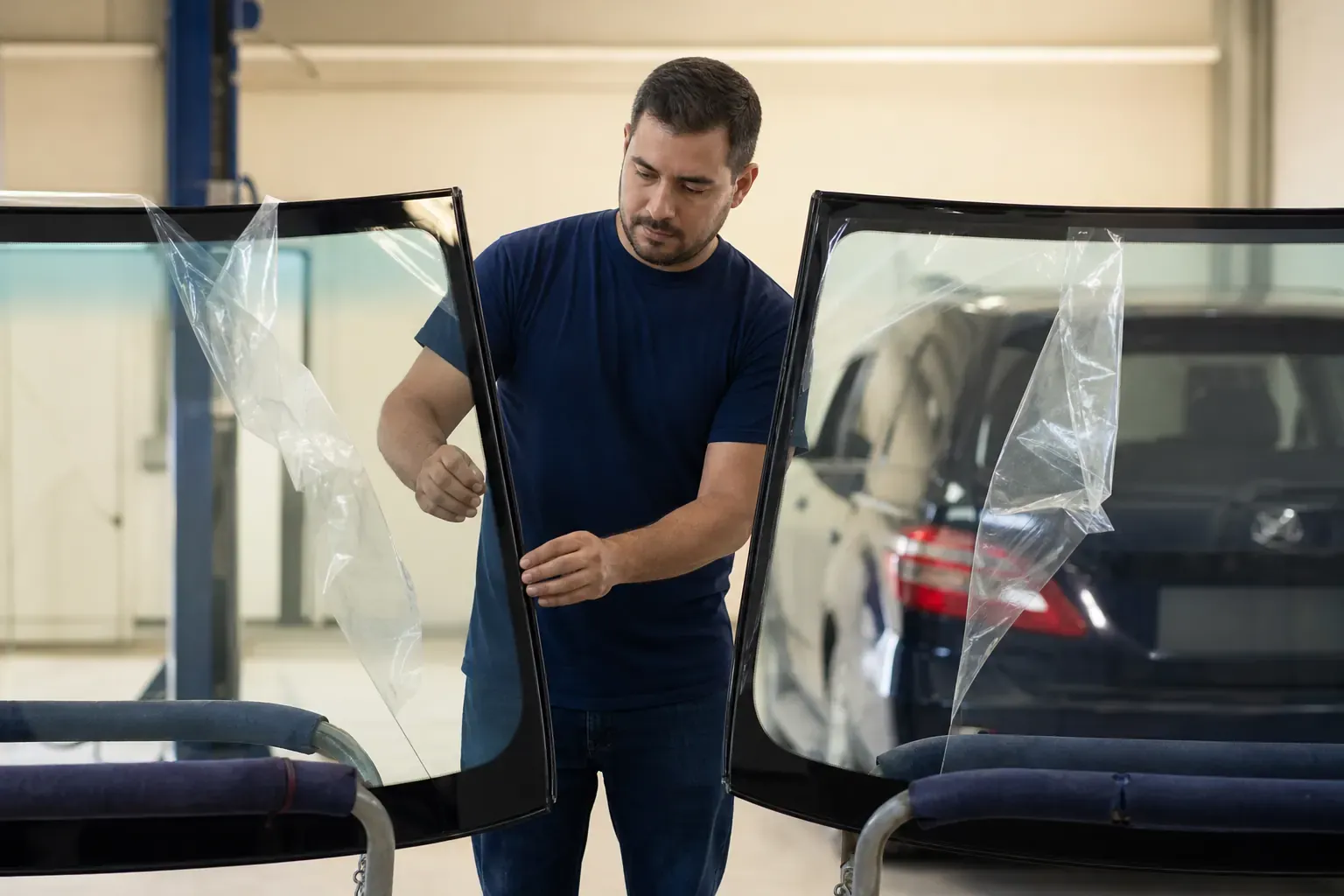
OEM, OEE and aftermarket windshields are three names for two choices
The words on a windshield quote can sound like three different products. In practice there are two. OEM glass comes from the carmaker's own supplier and usually carries the car brand's logo. Everything else is aftermarket, and the better aftermarket glass is often sold as OEE, original equipment equivalent.
Both kinds sold in the United States have to meet the same federal safety standards. The real differences are in fit, optical clarity near the camera, and price.
OEM vs aftermarket windshield glass at a glance
| Factor | OEM windshield | Aftermarket or OEE windshield |
|---|---|---|
| Who makes it | The carmaker's glass supplier | Another glass manufacturer |
| Logo in the corner | Usually the car brand | The glass maker only |
| Safety standard | Federal standard, DOT mark | Same federal standard, DOT mark |
| Camera bracket and optics | Matches the original | Close, varies by maker |
| Price | Higher | Usually lower |
| Availability | Can take longer on some models | Often in stock in DFW |
OEM vs aftermarket windshield choice comes down to these facts
- Both kinds meet the same safety standard
- Camera cars often favour OEM glass
- Aftermarket usually costs less
- Insurers often pay like kind and quality
- Install quality matters as much as brand
We are a free referral service. Partner shops source the glass and explain what is in your quote.
The DOT mark tells you who made your windshield
Every legal windshield has a small printed block in a lower corner. Glass people call it the bug. It shows the glass maker, a DOT code that ties it to federal safety approval, and often the car brand if it is OEM. Before you sign off on a new windshield, look at the bug. It should match what your quote said.
What the windshield DOT mark usually shows
| Item in the mark | What it tells you |
|---|---|
| Car brand logo | Often present on OEM glass |
| Glass maker name | Who made the windshield |
| DOT code | Federal safety approval for that maker |
| Laminated safety glass marking | Windshield grade glass |
| Date code | Roughly when the glass was made |
ADAS cameras make the OEM vs aftermarket windshield choice matter more
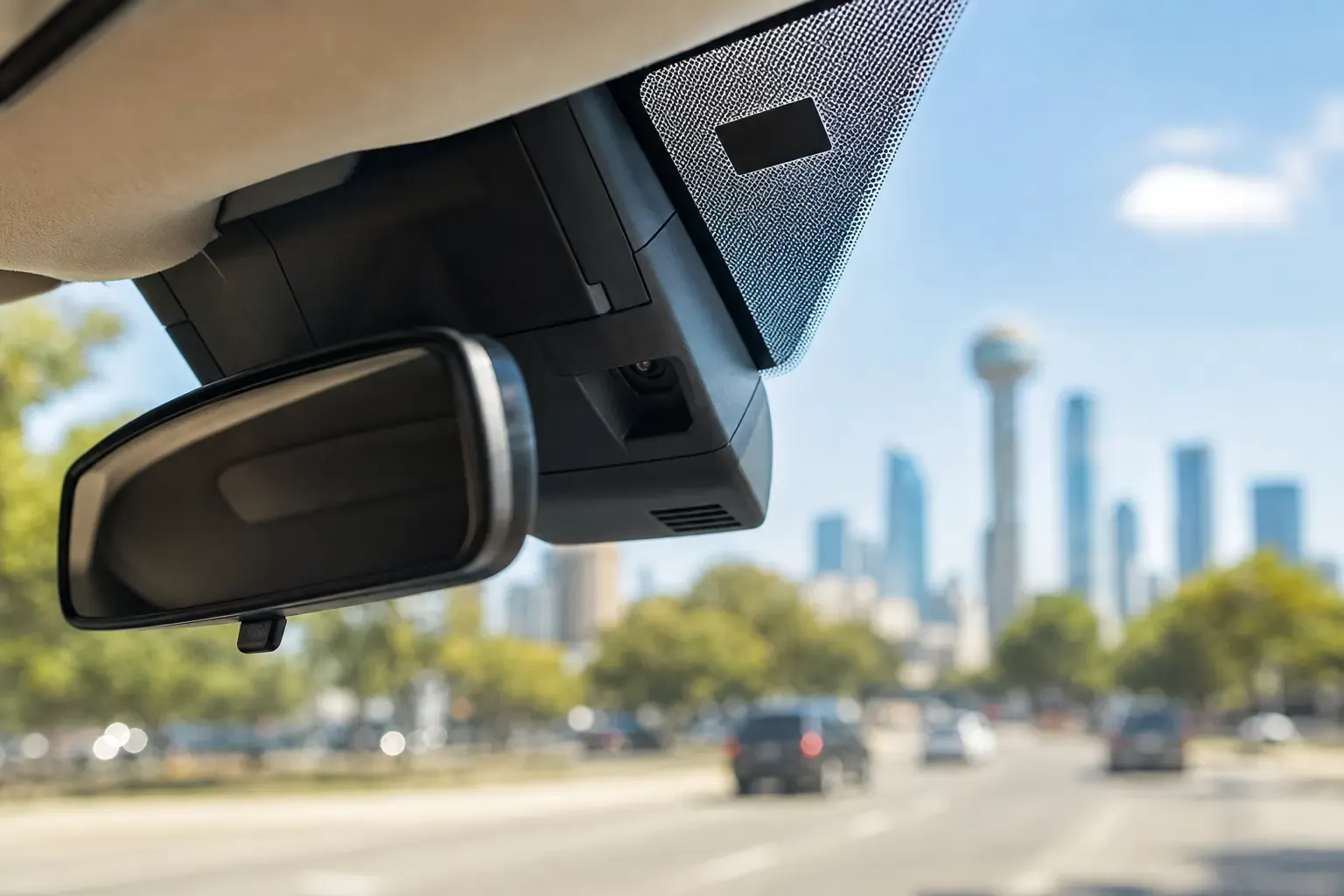
On a car without a camera, the windshield's job is to be clear, strong and sealed. On many newer cars, the glass also holds the forward camera bracket, and the camera looks through a small patch of glass behind the mirror. Small differences in that patch can affect the image the camera sees.
That is why many drivers with lane keeping and automatic braking pick OEM. Quality aftermarket glass built for camera cars exists, and plenty of shops use it well. Either way, the camera needs calibration after the new glass goes in. Our ADAS calibration page explains that step.
The ADAS camera window is where windshield glass quality shows
- The camera looks through a small patch of glass.
- The bracket is bonded to the windshield itself.
- Distortion in that patch can affect lane detection.
- Calibration follows any windshield replacement.
Texas insurers often pay for like kind and quality glass
Many auto policies promise glass of like kind and quality. In practice that often means quality aftermarket glass, not OEM. Some policies, especially on newer or leased cars, do cover OEM. Rules vary by insurer and policy, so ask before the job if OEM matters to you. If the policy pays only aftermarket, some shops let you pay the difference for OEM. Our Texas windshield insurance guide covers the rest of the claim.
Ask which windshield brand is in your quote
Tell us your car and whether you prefer OEM or aftermarket glass. We match you with a vetted partner shop for free, and the shop lists the glass in writing.
Get Matched FreeWhich windshield to pick for your car
OEM or aftermarket windshield by type of car
| Your car | Often a good pick | Why |
|---|---|---|
| Older car, no camera or sensors | Quality aftermarket | Same safety, lower price |
| Newer car with ADAS camera | OEM, or OEE built for cameras | Optics and bracket fit |
| Head up display | OEM often | Special wedge glass |
| Leased car | Check the lease terms | Some leases expect OEM |
| Heated or acoustic glass | Matched from the VIN | Keep the features you paid for |
Price matters too. In Dallas, standard windshields typically run $200 to $500 and camera or luxury windshields $500 to $1,500 with calibration. Those are typical market ranges, not our quote. See the Dallas windshield replacement cost guide and our main windshield replacement page for the full job.
Choosing between OEM and aftermarket windshield glass takes four steps
Check for a camera or head up display
Ask your insurer what glass it pays for
Get matched with a Dallas auto glass partner
Check the DOT mark on the new glass
OEM vs aftermarket windshield questions
What is the difference between OEM and aftermarket windshields?
The difference between OEM and aftermarket windshields is who makes them. OEM glass is made by or for the carmaker and usually carries its logo. Aftermarket glass is made by other manufacturers to fit the same car and meet the same federal safety standards. Fit, optics and bracket placement can differ slightly between them.
What does OEE mean on a windshield?
OEE on a windshield stands for original equipment equivalent. It is aftermarket glass designed to match the original part in shape, thickness and features, made by a company other than the carmaker's supplier. Many shops use OEE and aftermarket to mean the same thing. Quality varies by manufacturer, so ask which brand is in your quote.
Is aftermarket windshield glass safe?
Aftermarket windshield glass sold in the United States is generally safe, because it must meet the same federal safety standards as OEM glass and carry a DOT mark. Look for that mark in the corner of the glass. A proper install with the right urethane matters as much as the glass brand for crash safety.
Do I need an OEM windshield for my ADAS camera?
You do not always need an OEM windshield for an ADAS camera, but many drivers and some carmakers prefer it. The camera looks through a small window in the glass, and OEM glass usually matches its optics and bracket closely. Quality aftermarket glass made for camera cars exists too. Either way, the camera needs calibration after replacement.
Will my insurance pay for an OEM windshield in Texas?
Whether insurance pays for an OEM windshield in Texas depends on your policy and insurer. Many policies pay for glass of like kind and quality, which can mean aftermarket. Some policies, especially on newer or leased cars, cover OEM. Ask your insurer before the job, and ask the shop what glass the claim allows.
How do I tell if my windshield is OEM?
To tell if your windshield is OEM, look at the small printed mark in a lower corner of the glass. OEM glass usually shows the carmaker's logo along with the glass maker's name and a DOT code. Aftermarket glass shows its own maker's name and DOT code without the car brand. The mark is often called the bug.
Is OEM windshield glass worth the extra cost?
OEM windshield glass is often worth the extra cost on newer cars with ADAS cameras, head up displays or acoustic glass, where fit and optics matter most. On an older car without a camera, quality aftermarket glass usually does the job for less. Typical Dallas windshield prices run $200 to $500 standard, not our quote.
Does aftermarket windshield glass cause more wind noise?
Aftermarket windshield glass can cause more wind noise if it skips the acoustic layer your car came with, or if the fit and moldings are not quite right. Many aftermarket windshields include acoustic layers when the original did. Ask the shop to match acoustic glass from the VIN, and make sure new moldings are part of the job.
What is the DOT number on a windshield?
The DOT number on a windshield is a code that identifies the glass manufacturer and shows the glass meets federal safety standards for auto glass. It appears in the small printed mark in a corner of the windshield, along with other codes. Every legal windshield sold in the United States carries one, OEM or aftermarket.