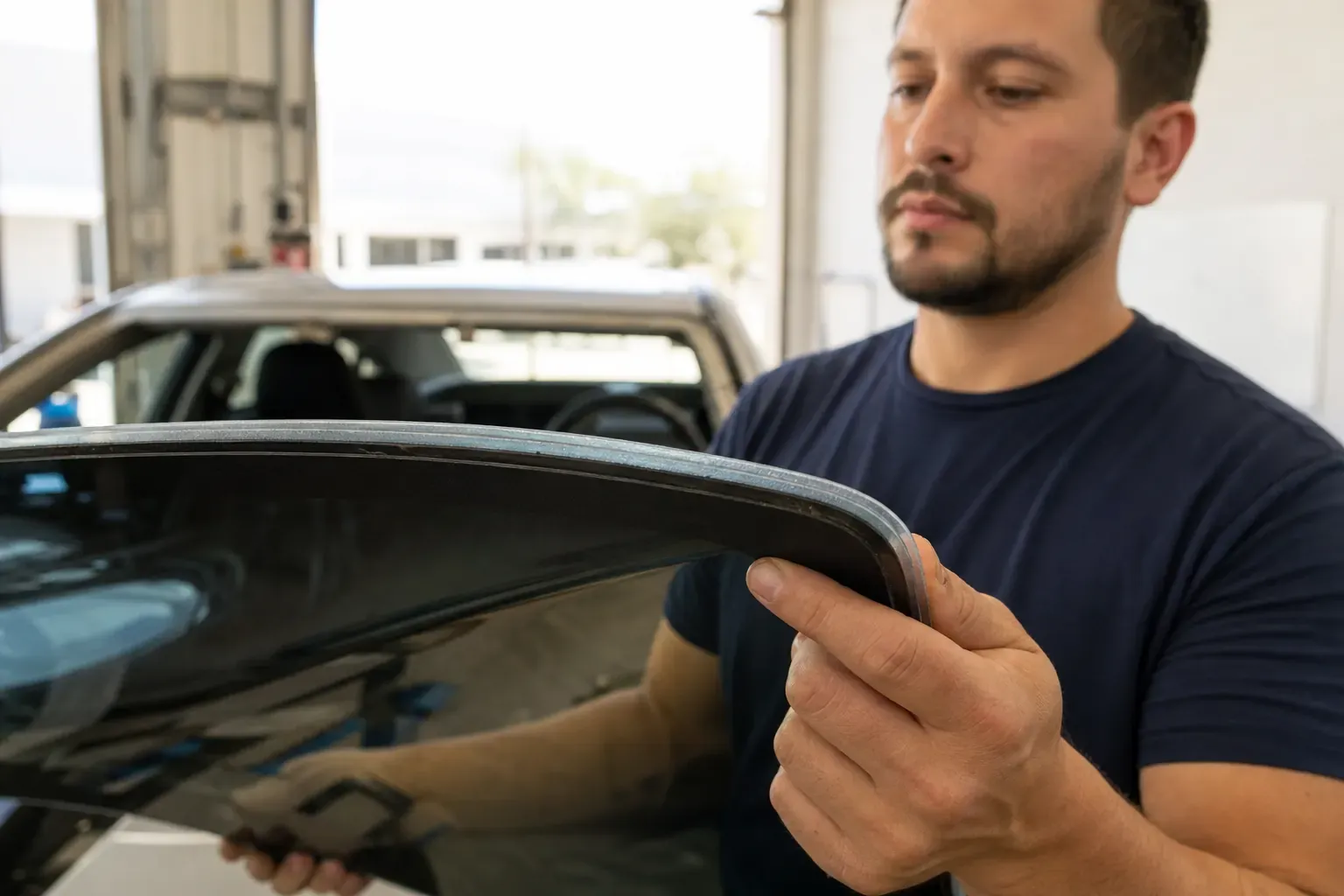
Acoustic windshield glass hides a sound damping layer in the middle
Every windshield is laminated: two thin sheets of glass bonded to a clear plastic layer called PVB. That layer is what holds the glass together when it cracks. On acoustic windshield glass, the PVB is a special sound damping version, often with a softer core sandwiched in. It soaks up vibration from wind rushing over the roof and tires humming on concrete before that sound reaches your ears.
Acoustic windshield glass compared with standard laminated glass
| Point | Standard laminated windshield | Acoustic windshield glass |
|---|---|---|
| Middle layer | Standard PVB | Sound damping PVB |
| Main purpose of the layer | Hold glass together, safety | Safety plus noise reduction |
| Common on | Most cars | Many newer sedans, SUVs and premium trims |
| How to spot it | Standard glass label | Acoustic mark or icon on many labels |
| Typical Dallas range | $200 to $500 without cameras | Upper standard range or $500 to $1,500 |
Acoustic windshield glass facts for Dallas drivers
- A sound damping PVB layer cuts noise
- Many labels show an acoustic mark
- The VIN confirms acoustic glass
- Usually costs more than standard glass
- Match it at replacement to stay quiet
Autoglass in Dallas is a free referral service. Partner shops order and install the glass.
Checking the windshield label for acoustic glass
Look at the lower corner of your windshield, usually on the passenger side. There is a small printed block with the glass maker, safety codes and sometimes the carmaker's logo. On many acoustic windshields, that block includes the word acoustic, a letter or an ear shaped icon. The exact mark varies by maker, so if you do not see one, it does not prove the glass is standard. The VIN is the surest check.
Ways to confirm acoustic windshield glass before ordering
Check the acoustic glass label
- Lower corner of the windshield
- Look for an acoustic word or ear icon
- Marks differ between makers
Check the acoustic glass paperwork and VIN
- Window sticker or build sheet
- Owner manual option list
- A shop VIN lookup is the surest
Road noise after windshield replacement has three usual causes
If the cabin sounds louder after a new windshield, do not assume it is in your head. Three things usually explain it. The new glass may be standard instead of acoustic. A molding may not be seated, so air catches the edge at speed. Or there is a small gap in the seal that whistles. The fix depends on which one it is.
New windshield road noise causes and how to tell them apart
| What you hear | Likely cause | What to do |
|---|---|---|
| General hum, louder overall | Standard glass replaced acoustic glass | Check the label against your VIN |
| Whistle from one corner | Gap in the seal or molding | Call the installing shop |
| Flutter or buzz at highway speed | Loose molding or cowl panel | Ask the shop to reseat the trim |
| Noise only in crosswinds | Molding edge catching air | Note the speed and direction |
Ask for acoustic windshield glass if your car came with it
Tell us on the form if your car has acoustic glass or if you are not sure. We match you with a partner shop that checks your VIN and quotes the right windshield.
Get Matched FreeAcoustic windshield glass often comes bundled with other options
Acoustic glass rarely travels alone. On many newer models, the same windshield also carries a forward ADAS camera bracket, a rain sensor pad, a heated wiper area or a heads up display zone. Each mix is a separate part number, which is why two cars of the same model can need different windshields. When the shop decodes your VIN, it sees the whole list at once. If a camera is part of that list, plan on ADAS calibration after the install, whatever the glass brand.
Acoustic glass matters on loud DFW highways
Concrete highways like I-35E, I-635 and the George Bush Turnpike are noisy at 70 miles an hour, and Texas crosswinds add their own roar. Carmakers fit acoustic windshield glass partly so the cabin stays calm on exactly those roads. A cheaper standard windshield may fit the same opening, but you can hear the difference on a long commute. If your car came with acoustic glass, keep it. The main windshield replacement page covers how a partner shop handles the full job, and our guides explain other glass features.
Keeping your car quiet with acoustic windshield glass
Read the label on your current windshield
Share the VIN to confirm acoustic glass
Get matched with a partner windshield shop
Check the new windshield label after install
Acoustic windshield glass questions
What is acoustic windshield glass?
Acoustic windshield glass is laminated glass with a special sound damping plastic layer, a type of PVB, between its two sheets of glass. That layer absorbs some of the vibration from wind and road noise before it reaches the cabin. Many carmakers fit it on newer models, especially quieter sedans, SUVs and premium trims.
How can I tell if my windshield is acoustic?
You can often tell your windshield is acoustic by the small printed label in a lower corner of the glass, which may show the word acoustic, the letter A or an ear icon, depending on the maker. Your VIN, window sticker or owner manual also confirms it. A glass shop can check from the VIN before ordering.
Is acoustic windshield glass worth it?
Acoustic windshield glass is worth keeping if your car came with it, because the cabin was designed around that quieter glass. Swapping to standard glass can make wind and tire noise more noticeable on the highway. If your car never had acoustic glass, adding it usually is not offered as an upgrade and makes little difference.
Why is my car louder after windshield replacement?
A car can sound louder after windshield replacement if standard glass replaced acoustic glass, a molding is loose, or the seal has a small gap that whistles at speed. Check the label in the corner of the new glass first. Wind noise from one spot points to a molding or seal, which the installing shop should check.
Does acoustic windshield glass cost more?
Acoustic windshield glass usually costs more than standard glass, because the interlayer is a special material and fewer versions are made. It often pushes a quote toward the upper part of the $200 to $500 Dallas range, or into $500 to $1,500 when paired with cameras and sensors. These are typical market ranges, not our quote.
Is acoustic glass stronger than regular windshield glass?
Acoustic glass is not meant to be stronger than regular windshield glass. Both are laminated safety glass and meet the same safety standards. The difference is the sound damping layer, which targets noise rather than impact strength. Some acoustic glass also blocks more heat or UV, depending on the maker and the car.
Can aftermarket windshields be acoustic?
Many aftermarket windshields are made in acoustic versions for popular models, and they use a similar sound damping interlayer. The key is ordering the acoustic part number, not the standard one. Ask the partner shop to confirm the glass it quotes is acoustic if your original was, and check the label after the install.
Do side windows have acoustic glass too?
Some cars have acoustic laminated glass in the front side windows as well as the windshield, especially premium and quieter models. Most side windows are still tempered glass. If your car has laminated acoustic side glass, it needs that same type when replaced. The glass label in the corner of the window usually shows whether it is laminated.